Understanding the Accounting Ledger Book: A Comprehensive Guide
The Accounting Ledger Book is a fundamental tool for managing and recording financial transactions. It serves as a detailed record of all financial activities, providing a clear and organized way to track income, expenses, and other financial data. This article will help you understand what makes the Accounting Ledger Book distinct, how it compares with similar options, and when it might be the right choice for your needs.
What is an Accounting Ledger Book?
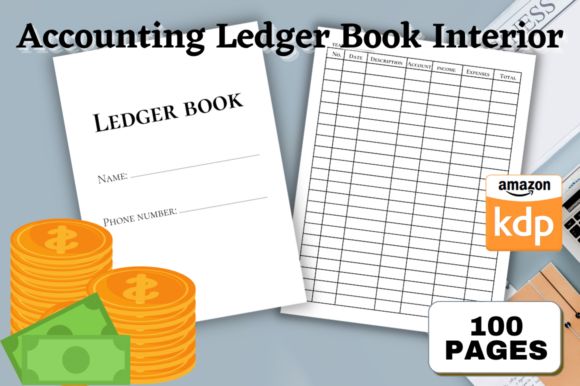
An Accounting Ledger Book is a physical or digital book used to record and summarize financial transactions. Each page typically includes columns for dates, descriptions, debits, and credits, allowing for a systematic and chronological record of all financial activities. This format helps in maintaining accuracy and transparency in financial management.
Key Features of the Accounting Ledger Book
- High-Quality Print Ready PDF: The Accounting Ledger Book is available in a high-quality, print-ready PDF format, ensuring that the pages are crisp and easy to read.
- Ready to Upload to Amazon KDP: The book cover design is ready for upload to Amazon KDP, making it convenient for self-publishers and businesses.
- Product Details: The Accounting Ledger Book is 7.44 x 9.69 inches in size, with bleed, and comes in both PDF and PNG formats. It includes 100 pages, providing ample space for detailed financial records.
How Does the Accounting Ledger Book Compare with Other Options?
When comparing the Accounting Ledger Book with other financial management tools, several factors come into play, including ease of use, cost, and functionality.
Ease of Use
The Accounting Ledger Book is straightforward and user-friendly, requiring minimal setup. It is particularly beneficial for individuals and small businesses who prefer a manual, hands-on approach to financial management. In contrast, digital accounting software may offer more advanced features but can have a steeper learning curve.
Cost
While digital accounting solutions often require monthly or annual subscription fees, the Accounting Ledger Book is a one-time purchase. This makes it a cost-effective option, especially for those with limited budgets or who need a simple, no-frills solution.
Functionality
The Accounting Ledger Book provides a basic yet effective way to manage financial records. For more complex financial needs, such as detailed reports, automated calculations, and integration with other business systems, digital accounting software may be more suitable. However, for straightforward tracking and record-keeping, the Accounting Ledger Book is a reliable and efficient tool.
Strengths
- Simplicity: The Accounting Ledger Book is easy to use and requires no technical knowledge, making it accessible to a wide range of users.
- Cost-Effective: With no ongoing subscription fees, it is a budget-friendly option for managing financial records.
- Physical Record: Having a physical or printable record can be reassuring and useful for audits and long-term storage.
Limitations
- Limited Automation: Unlike digital solutions, the Accounting Ledger Book does not offer automatic calculations or real-time updates, which can be time-consuming for large volumes of transactions.
- Data Security: Physical books can be lost or damaged, and while digital versions can be stored securely, they do not offer the same level of security as cloud-based solutions.
- Scalability: As a business grows, the Accounting Ledger Book may become less practical, and more advanced financial management tools may be required.
When to Choose the Accounting Ledger Book
The Accounting Ledger Book is an excellent choice for individuals, small businesses, and organizations that need a simple, reliable, and cost-effective way to manage their financial records. It is particularly well-suited for:
- Small Businesses: Small businesses with straightforward financial needs can benefit from the simplicity and affordability of the Accounting Ledger Book.
- Individuals: Individuals who want to keep track of personal finances, such as household expenses and income, can find the Accounting Ledger Book to be a useful tool.
- Non-Profits and Community Organizations: Non-profits and community organizations with limited resources can use the Accounting Ledger Book to maintain transparent and organized financial records.
When to Consider Alternatives
While the Accounting Ledger Book is a versatile and practical tool, there are situations where alternative solutions may be more appropriate:
- Large Businesses: Large businesses with complex financial operations may require more advanced features, such as automated reporting, multi-user access, and integration with other business systems.
- Real-Time Financial Management: For businesses that need real-time financial data and automated updates, digital accounting software can provide more robust and dynamic solutions.
- Cloud-Based Solutions: Cloud-based accounting tools offer the advantage of secure, off-site storage and accessibility from any device, which can be crucial for remote work and collaboration.
Making the Right Decision
Choosing the right financial management tool depends on your specific needs, budget, and preferences. The Accounting Ledger Book is a reliable and cost-effective option for those who value simplicity and manual control over their financial records. However, if you require more advanced features and automation, exploring digital accounting solutions may be more beneficial.
By considering the strengths and limitations of the Accounting Ledger Book and comparing it with other options, you can make a more informed decision that aligns with your financial management goals.